The Many Faces of Love in the New Testament
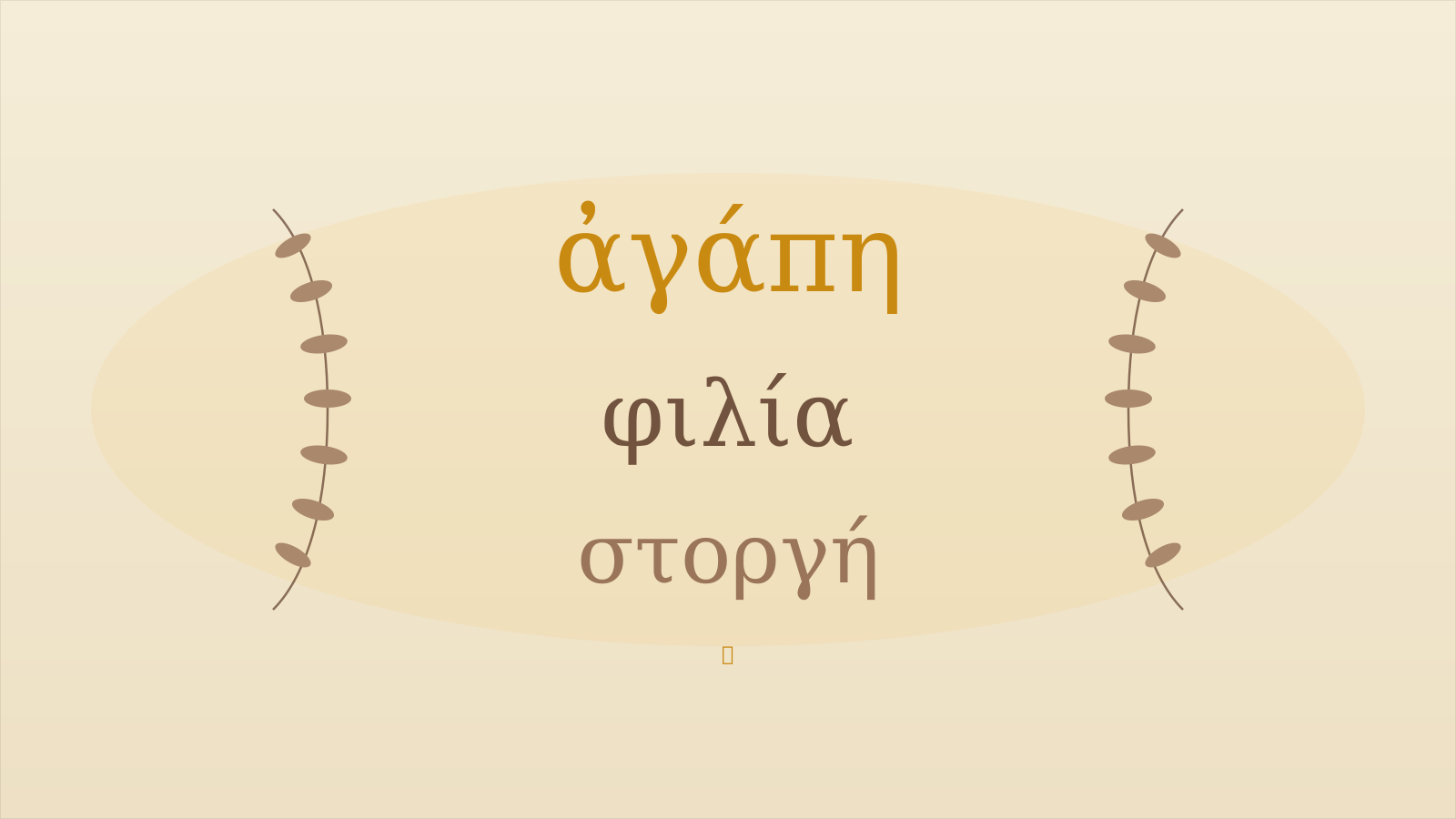
Agape, philia, storge — the Greeks had words we've lost. Here's why it matters for how we read the Gospels.
John 21:15
“When they had finished eating, Jesus said to Simon Peter, ‘Simon son of John, do you love me more than these?’”
In English, we use the word love for almost everything. We love God, we love our friends, we love our children, we love our spouse, we love pizza, and we love a good night’s sleep. The same word has to carry far too much weight.
That does not mean English is deficient. It does mean we sometimes miss shades of meaning that the New Testament world noticed more easily. When we read the Gospels and letters with only one flat idea of love in mind, we can end up hearing the right words with the wrong depth.
The Greeks had several words for love, and while the New Testament does not turn them into a strict technical system, the differences still help. They remind us that love is not one-dimensional. Love can mean sacrifice, friendship, affection, loyalty, welcome, delight, and devotion. That matters, because the life Jesus points people toward is not about becoming vaguely loving in general. It is about being formed into the right kinds of love.
Why the Distinctions Matter
When modern readers hear “love,” we often default to either emotion or morality. Love becomes either a feeling we have or a duty we perform.
The New Testament is richer than that. Its world assumes that love takes shape in relationships, habits, loyalty, and embodied care. Love is not only what happens inside a person. It creates bonds. It sustains households. It restores trust. It reveals character.
That is one reason these Greek words are worth revisiting. They help us see that Jesus is not calling people into a generic spiritual niceness. He is calling people into a new way of being human, one in which love becomes the organizing principle of life.
Agape: Love That Moves Toward the Good
Agape is the word many people know best, even if they have only heard it in passing. It is often described as self-giving love, and that is broadly right. In the New Testament, it points to a love that seeks the good of the other, not merely the satisfaction of the self.
This is the word used in some of the most famous passages about God’s love and the love believers are meant to show. It carries moral seriousness. It is not merely attraction, warmth, or instinct. It is a love shaped by intention.
That matters because many people hear “God loves you” and quietly translate it as, “God has warm feelings about you.” The New Testament means something stronger. God’s love moves toward people. It sacrifices. It forgives. It persists. It acts for restoration.
That same kind of love is then asked of human beings. People are not called only to admire love, but to grow into it. Agape is not sentimental. It is durable, intentional, and willing to bear cost for the sake of life and healing.
Philia: Love as Friendship and Shared Heart
Philia is often translated as friendship or brotherly affection. It carries warmth, closeness, and mutuality. If agape can sound lofty, philia feels nearer to ordinary human life. It is the love of shared joy, loyalty, trust, and companionship.
This matters more than many people realize. The life Jesus teaches is not only about obeying divine commands. It is also about being drawn into fellowship: with God, with Christ, and with one another. Friendship is not secondary to spiritual life. It is one of its fruits.
This helps explain why Jesus does not merely gather followers as a manager gathers workers. He calls disciples into closeness. He eats with them, teaches them, corrects them, and remains with them. The shape of discipleship is deeply relational.
That is also why spiritual life cannot be reduced to attending services or agreeing with ideas. If the gospel forms people in love, then friendship, trust, and shared life are not extras. They are part of the point.
Storge: The Love of Familiar Belonging
Storge is less visible in the New Testament, but the idea behind it still matters. It refers to natural affection, especially the kind that belongs in families. It is the warmth of belonging, the love that says, “These are my people.”
Modern life is often marked by loneliness, mobility, and fragmentation. Many people know how to network, but fewer know how to belong. That is one reason the New Testament’s family language can feel either beautiful or painful. It points toward something deep: human beings are not only made for belief, but for bonds.
The biblical vision of love includes this dimension too. Faith is not only individual conviction. It is meant to create a people who learn how to live as brothers, sisters, mothers, fathers, children, and neighbors in a healed way. Not perfectly, but genuinely.
This is where love stops being abstract. It becomes hospitality. Patience. Forgiveness. Table fellowship. Shared burdens. A home for people who have forgotten what home is supposed to feel like.
The Point Is Not Vocabulary Alone
Of course, we should not force these words too rigidly. The New Testament writers sometimes overlap them, and they are not building a neat dictionary lesson for us.
But the distinctions still help, because they remind us that love has depth and texture. Some love is sacrificial. Some is affectionate. Some is familial. Some is the joy of nearness. Mature faith needs all of these in their proper place.
Without that fuller vision, faith can become thin. It can turn into moral performance without warmth, or emotional spirituality without endurance. The New Testament offers something richer: a way of life where love is strong enough to hold truth, tenderness, belonging, and responsibility together.
Why This Matters for Reading Jesus
When Jesus tells people to love, He is not asking for a vague positive attitude. He is inviting them into a transformed way of being human.
To love God is not simply to feel religious emotion. It is to give Him loyalty, trust, devotion, and obedience. To love neighbor is not simply to avoid harm. It is to actively will their good. To love other people well is not merely to be polite. It is to grow into a way of life shaped by sacrifice, friendship, and belonging.
This also helps when reading scenes like Jesus and Peter in John 21. Whatever one concludes about the exact Greek nuances in that passage, the conversation clearly asks more than, “Do you feel something for me?” It presses on the kind of love that can sustain calling, repair failure, and feed others.
In other words, the many faces of love help us read the Gospels more personally. They remind us that Jesus is not just collecting beliefs from people. He is restoring the heart, training relationships, and building a people whose lives can actually reflect the love of God.
Conclusion
The Greeks had more words for love than we usually do, and while that does not solve every interpretive question, it does open our eyes. It helps us read the New Testament with more sensitivity and more hope.
Love in Scripture is bigger than sentiment. It is sacrificial without being cold. It is affectionate without being shallow. It is familial without being possessive. It is strong enough to tell the truth and warm enough to make a home.
That is good news for seekers, longtime believers, and anyone trying to understand what Jesus is really about. The heart of faith is not bare obligation. It is learning how to receive and practice the kinds of love that come from God and lead people back to one another.
If we read the Gospels with that in mind, then love becomes more than a slogan. It becomes the shape of discipleship, the texture of community, and one of the clearest signs of what God intended for human life all along.